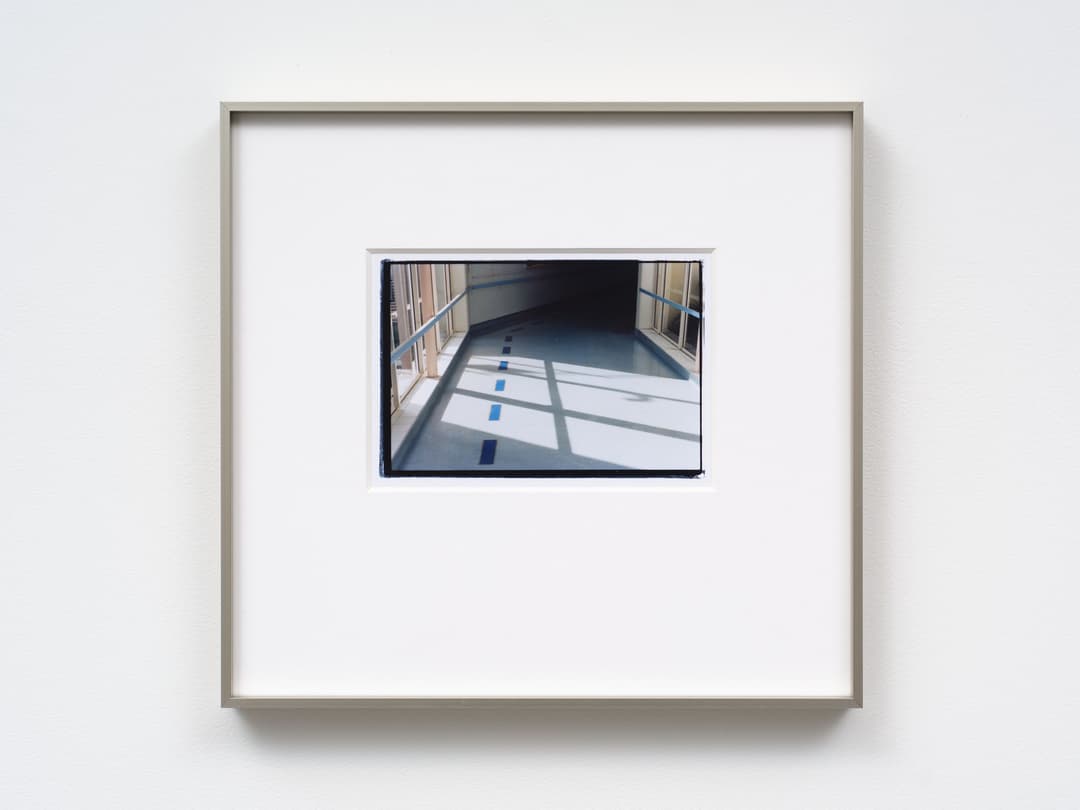
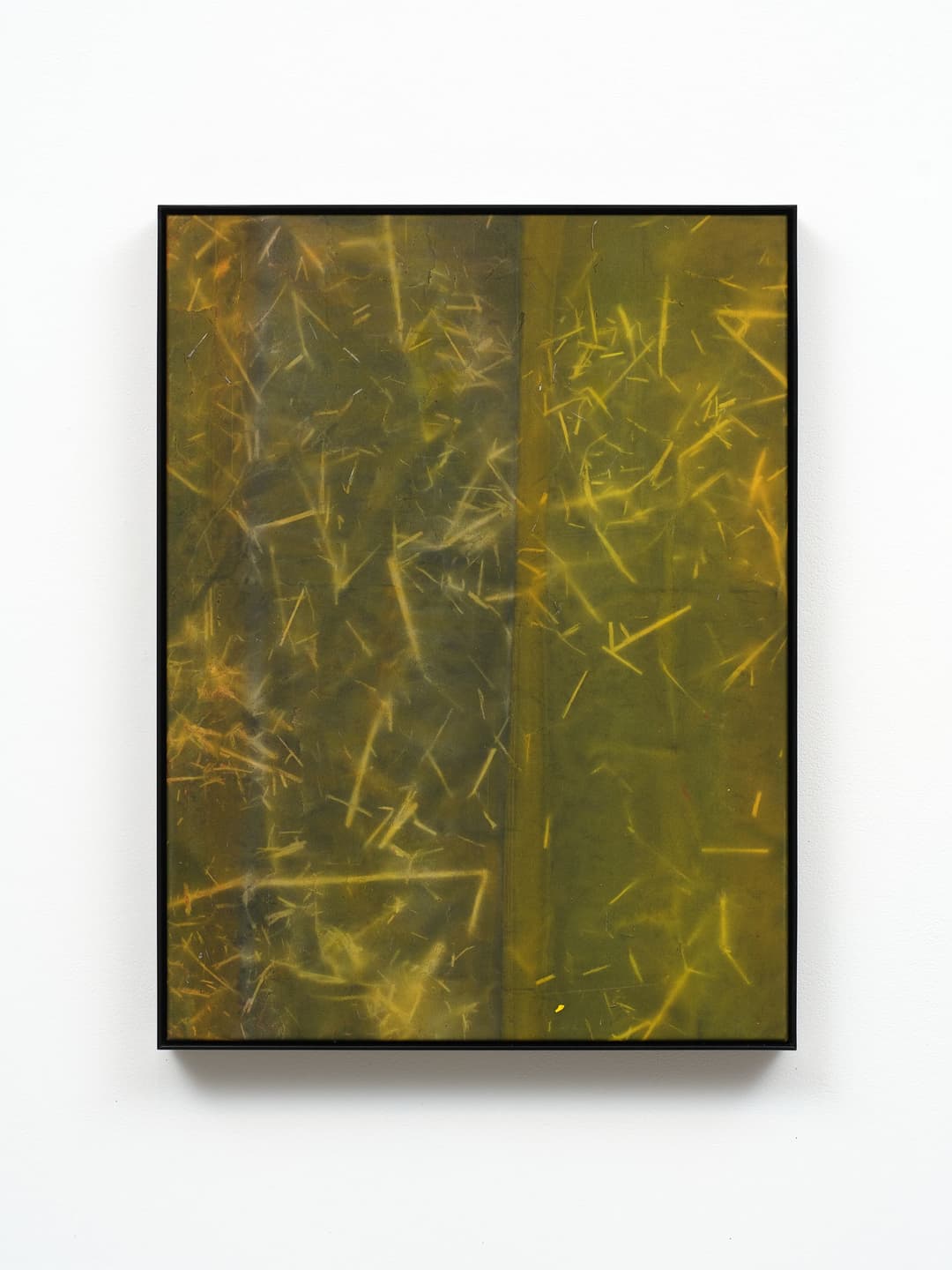
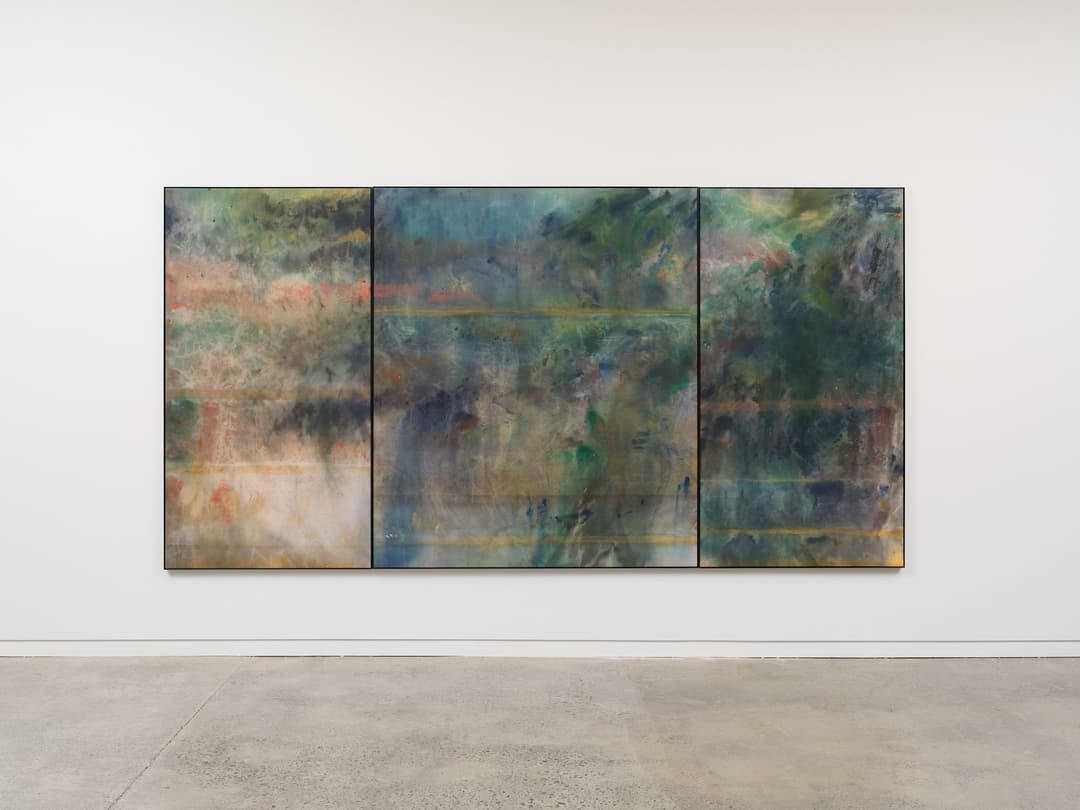
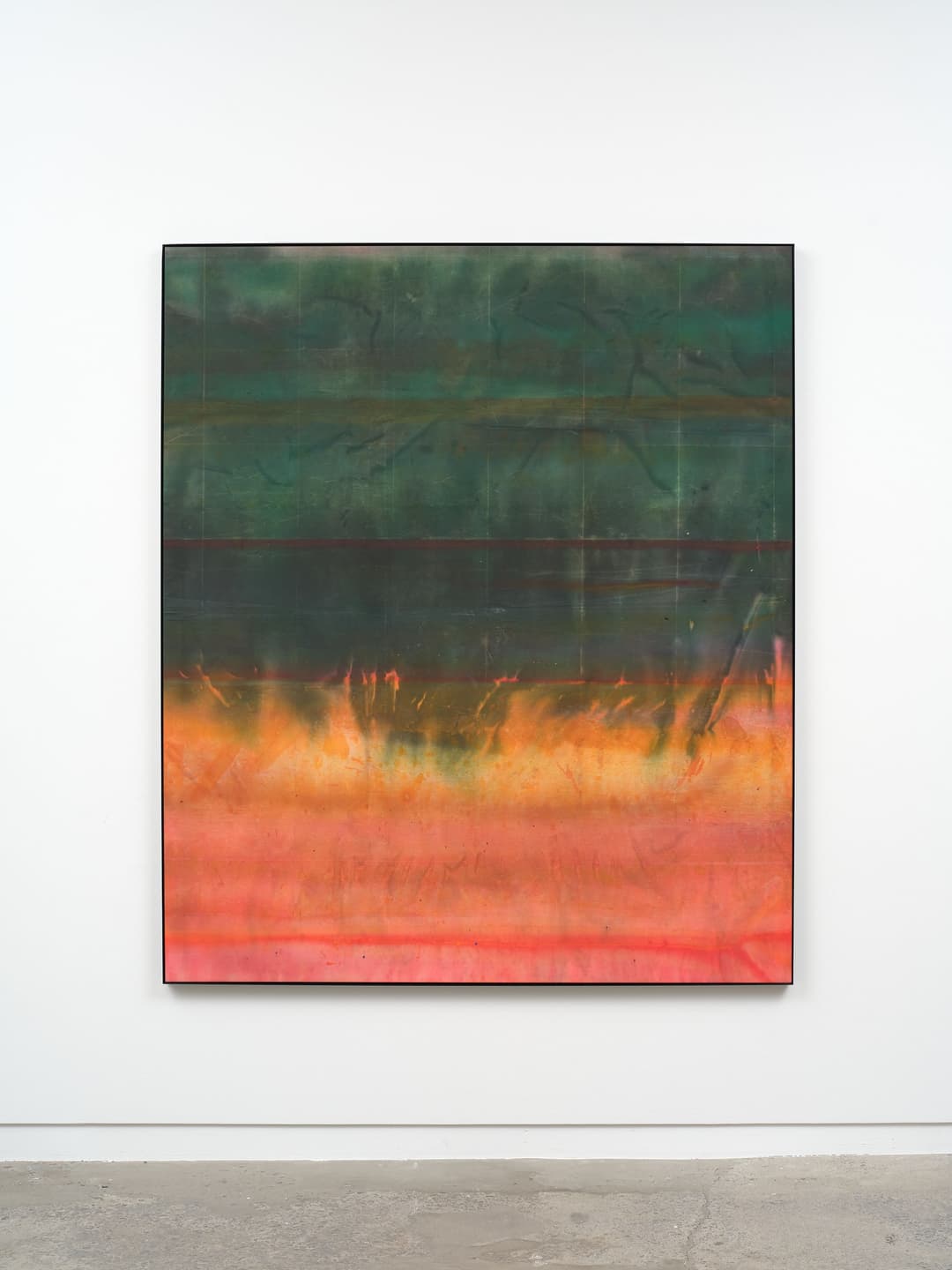
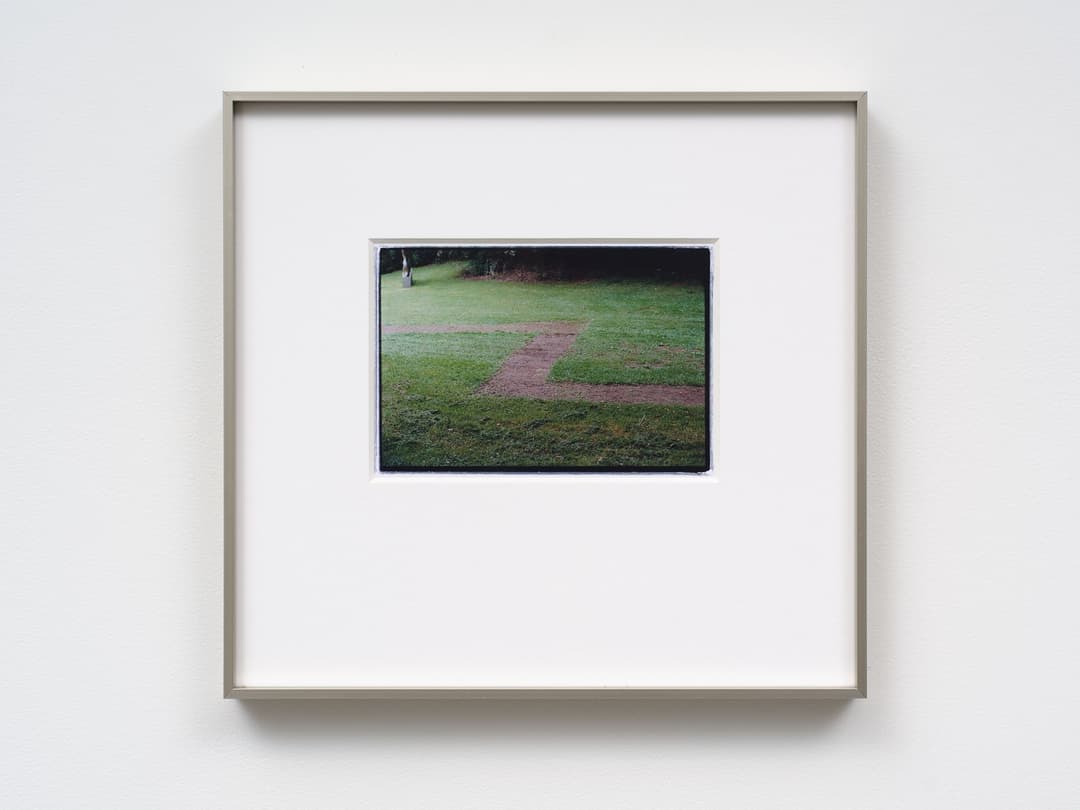
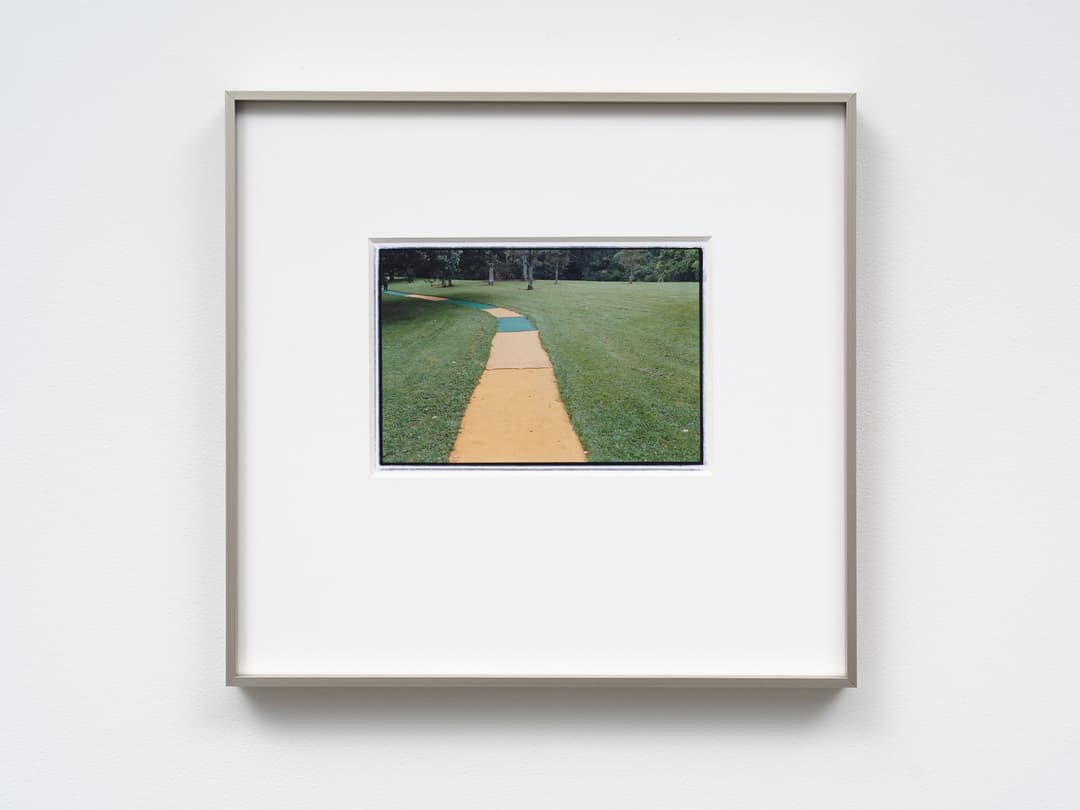
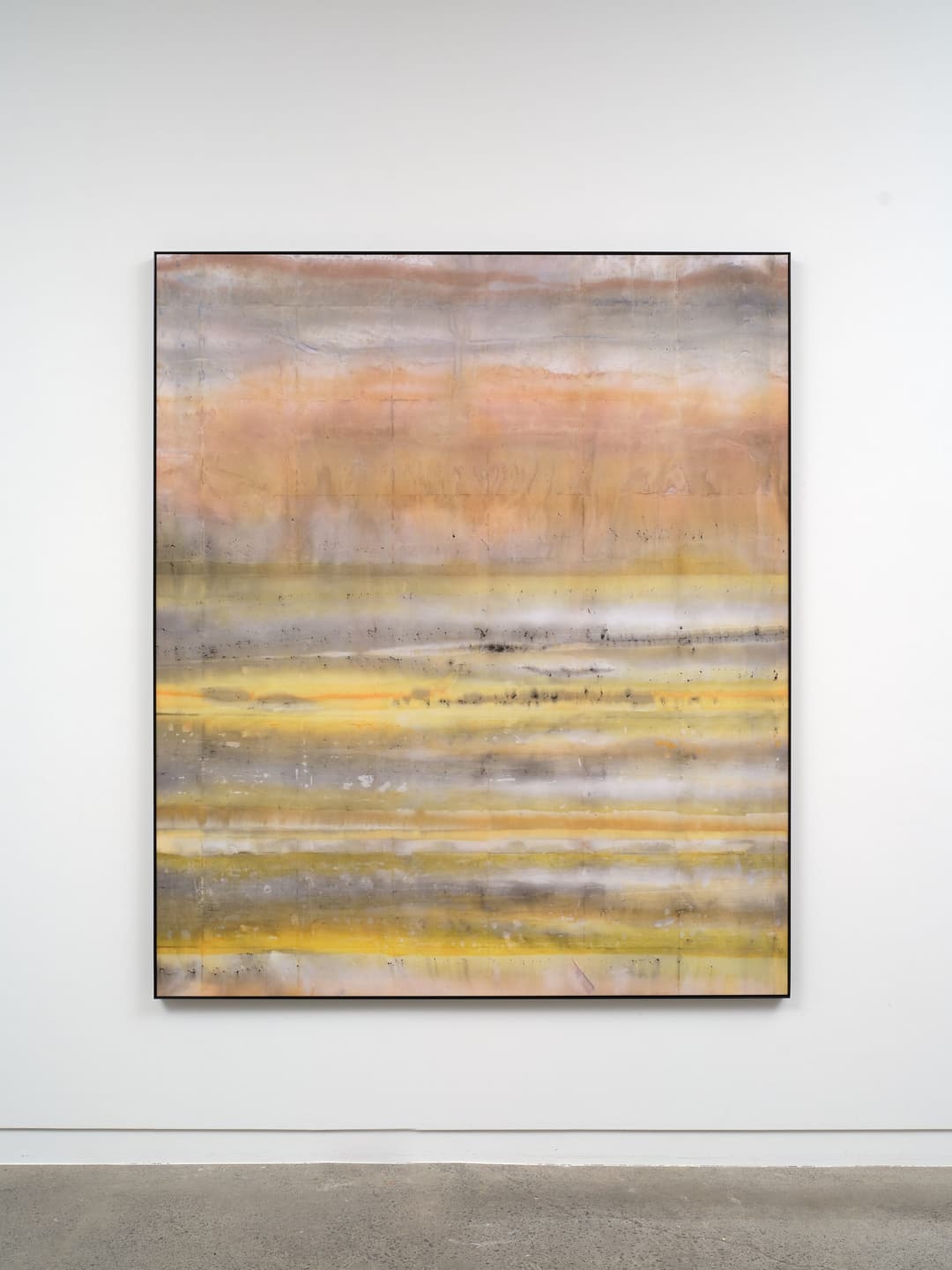
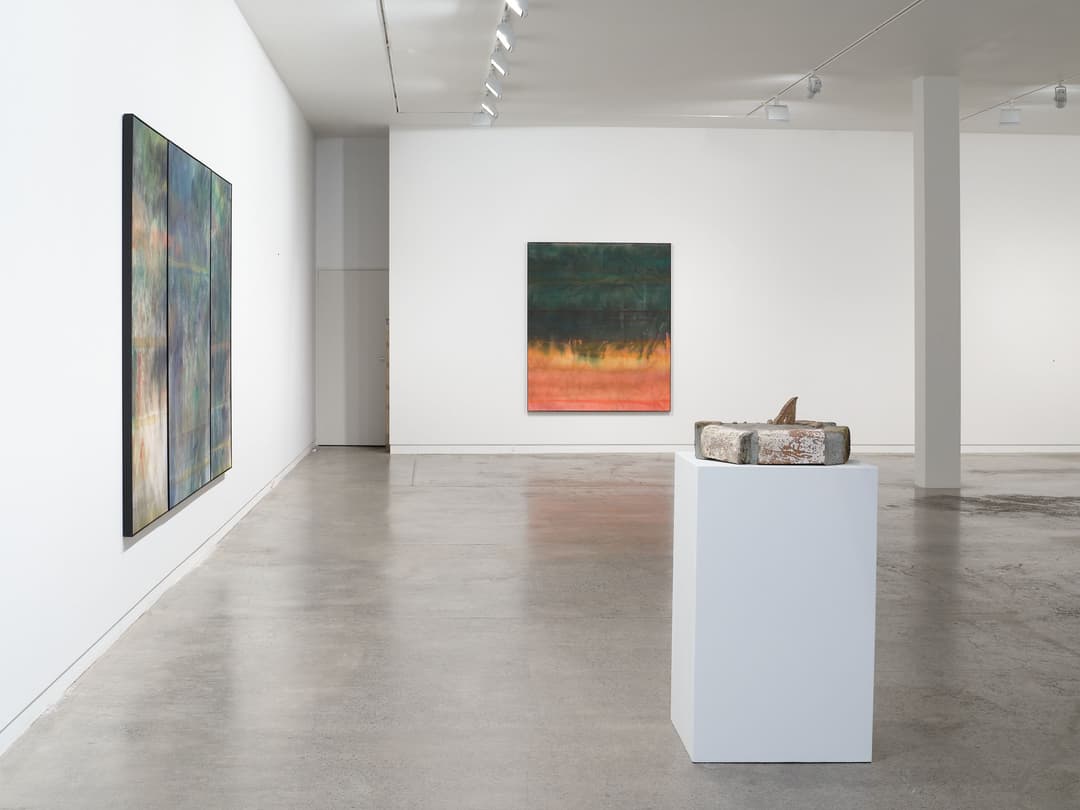
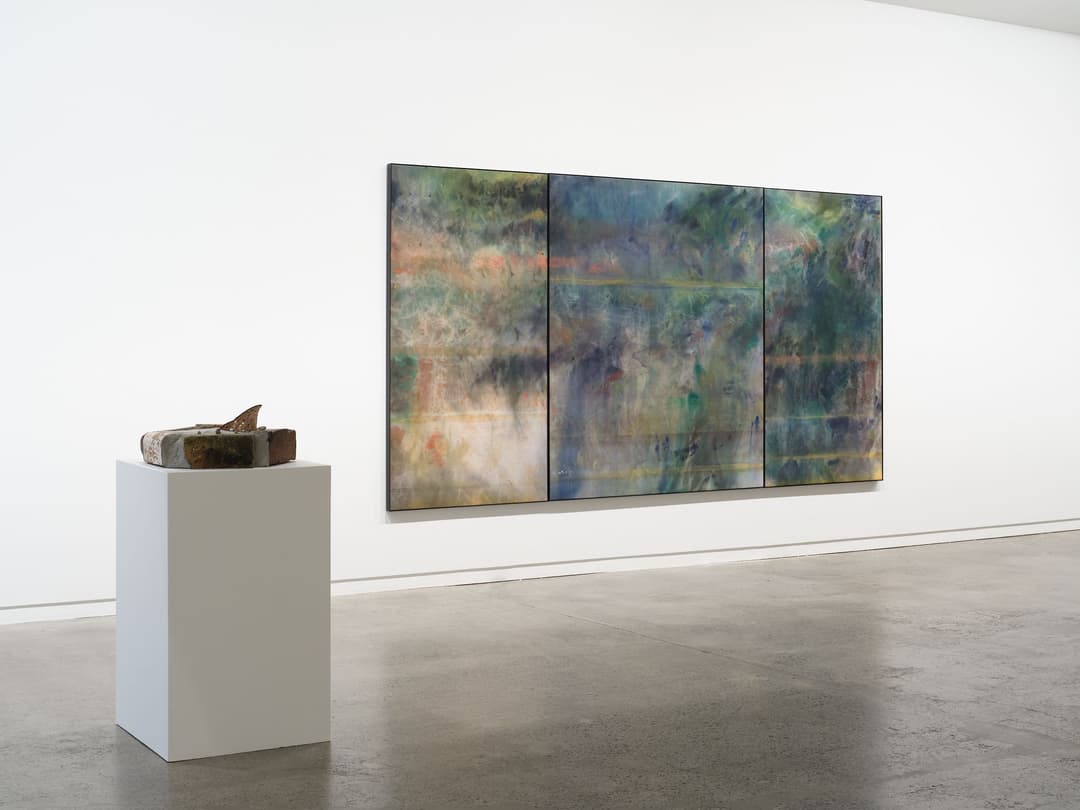
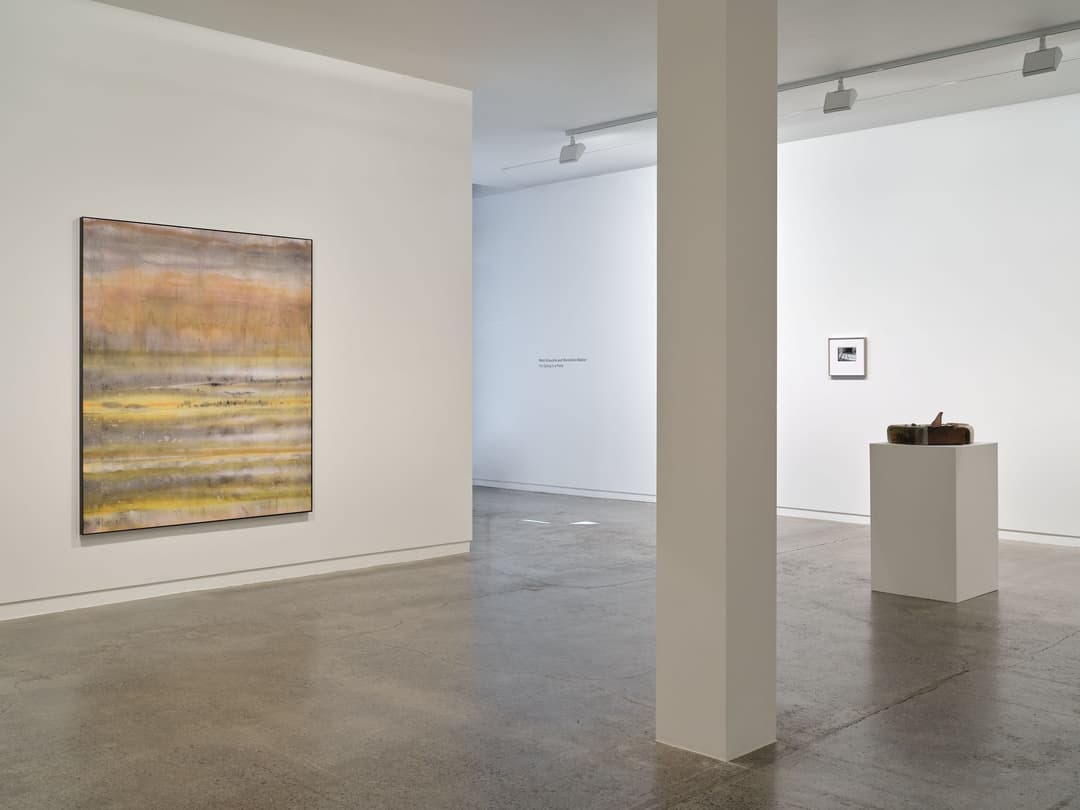
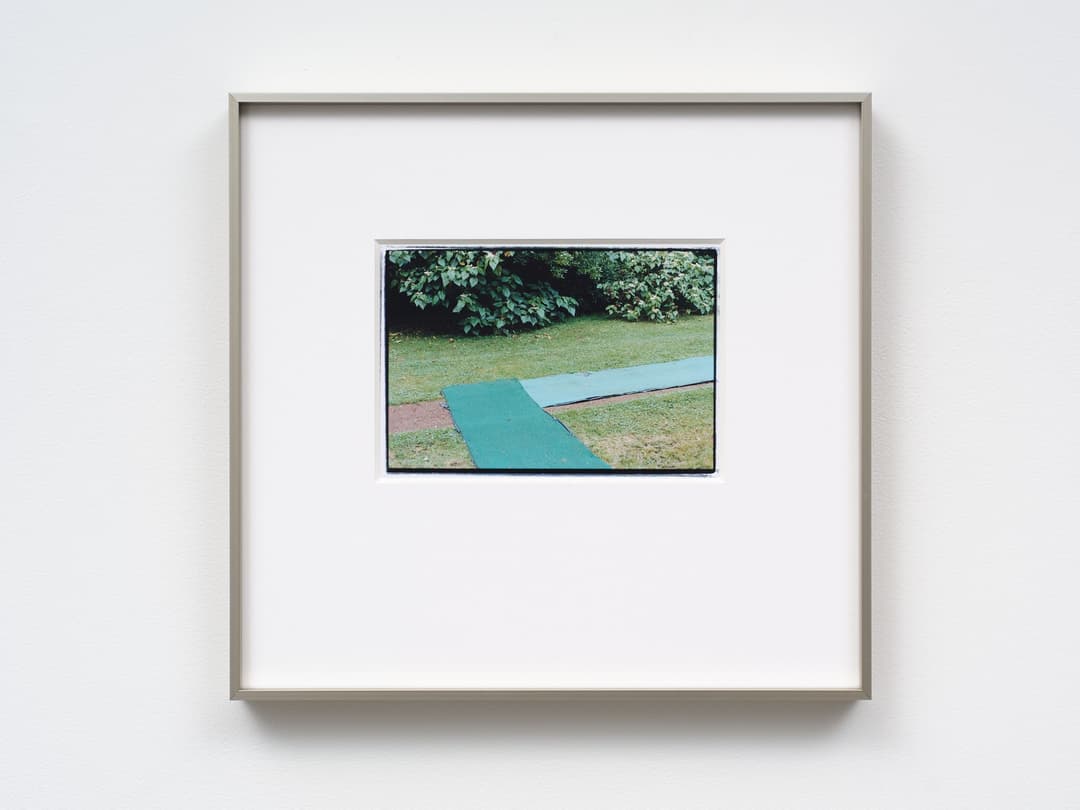
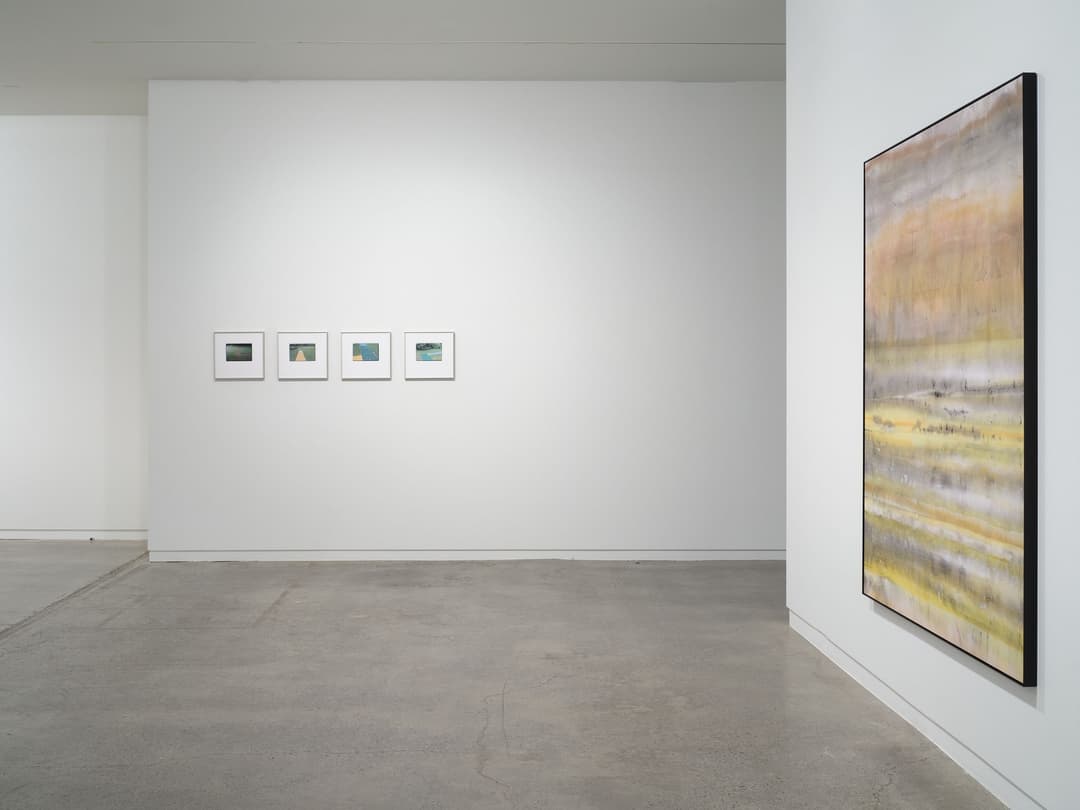
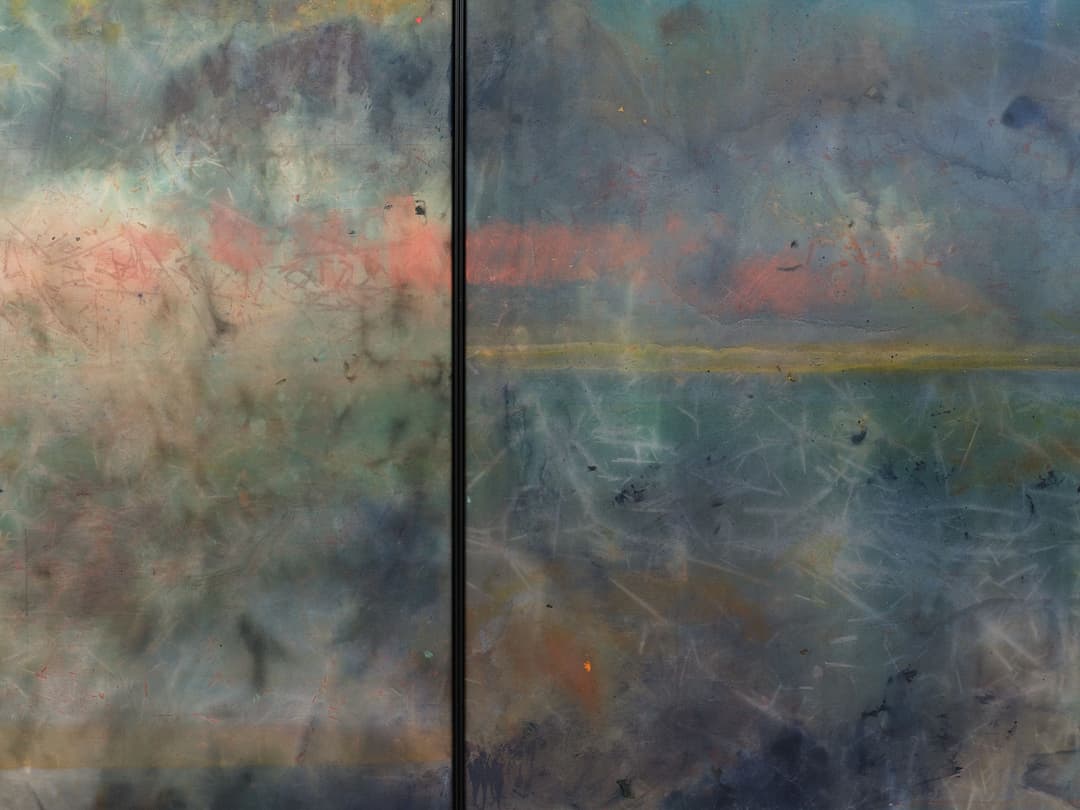
Matt Arbuckle’s current work is grounded in the walks he would take around Pukekawa, Auckland Domain while his child was being treated in the nearby hospital. The photographs and paintings included in I am going in a field index a relationship between care, colour, and pathways that are revealed through repetition. Often working outside, Arbuckle’s paintings layer grass clippings and differently-weighted pigments, so that some colours sink in the solution and create a hierarchy that conceptually corresponds to the medical test strips that would dictate the outcome of the day during this time.
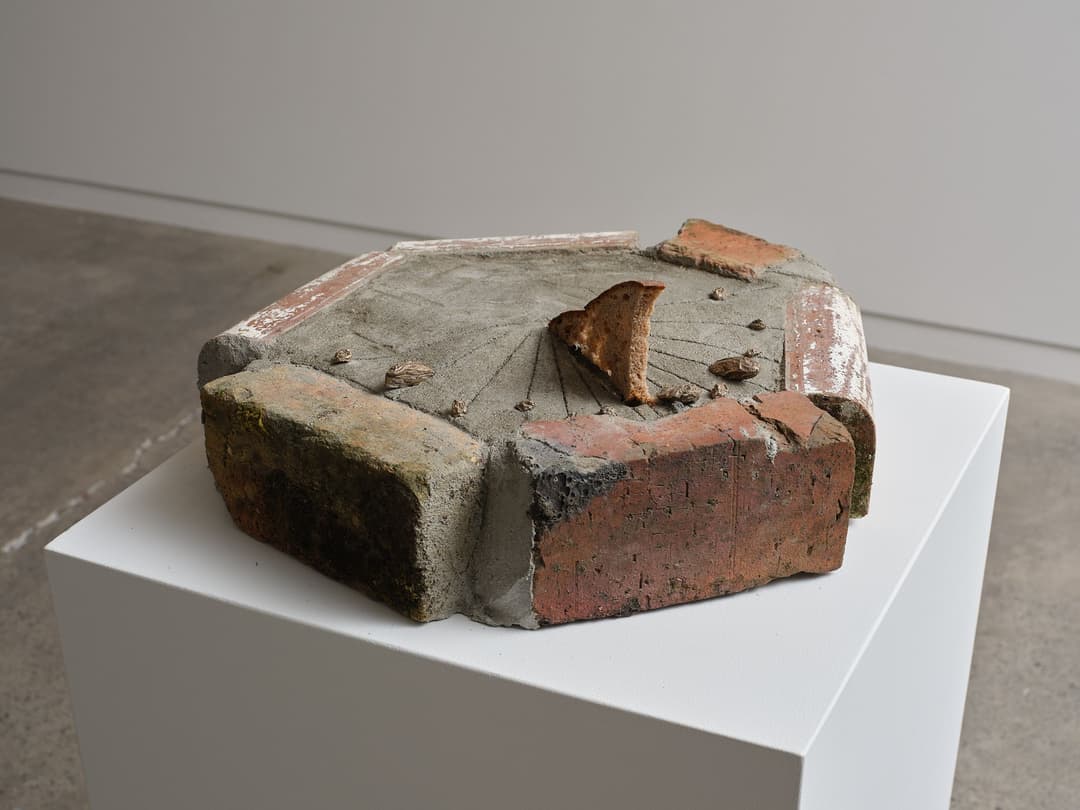
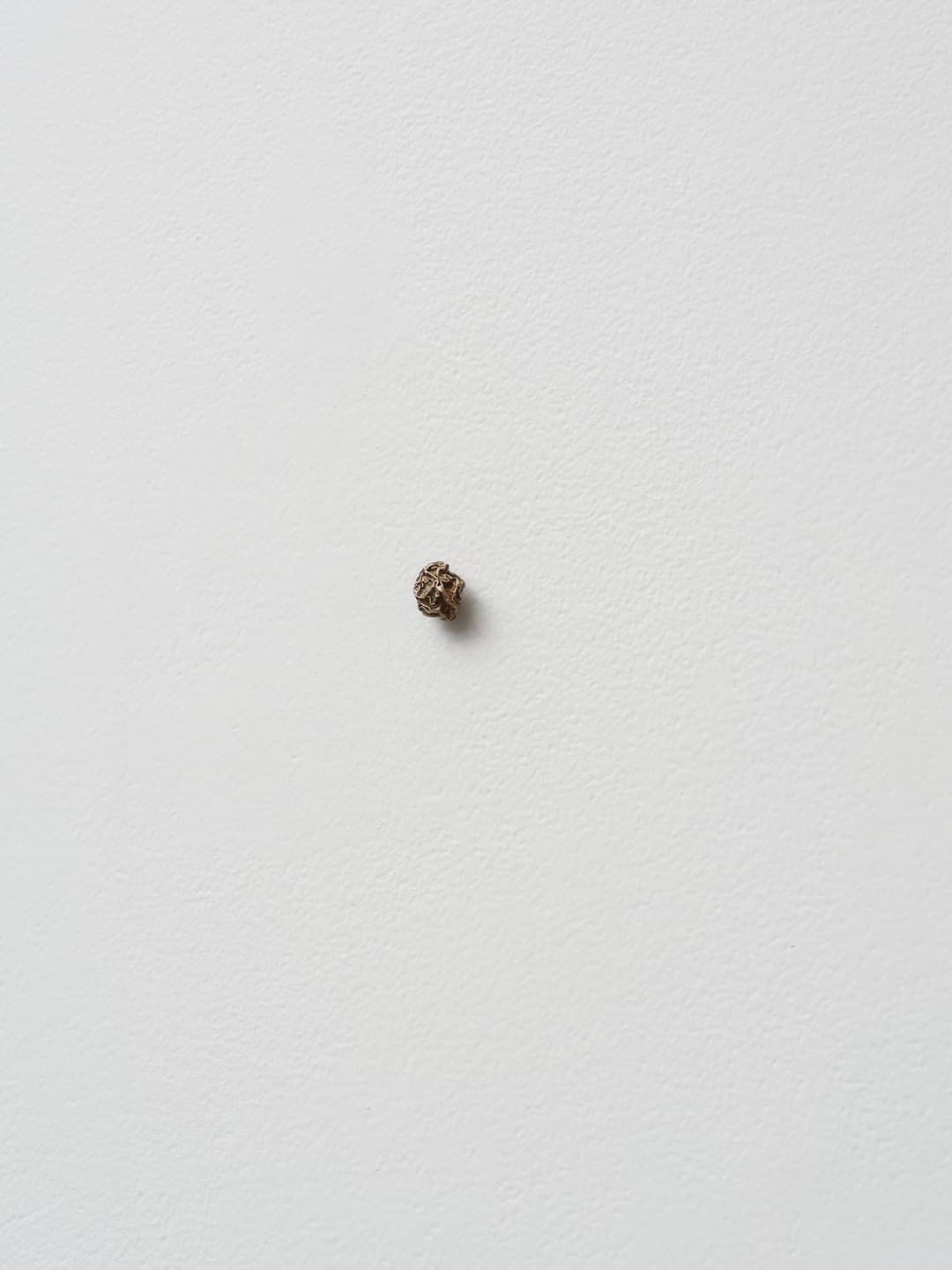
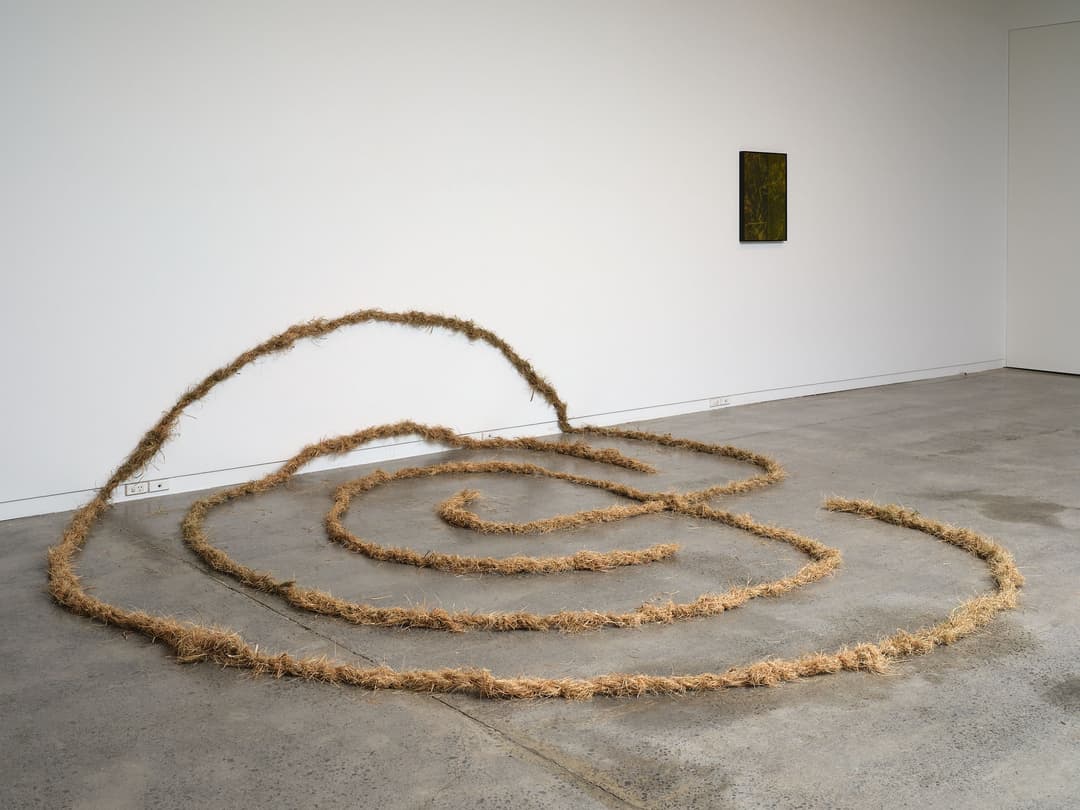
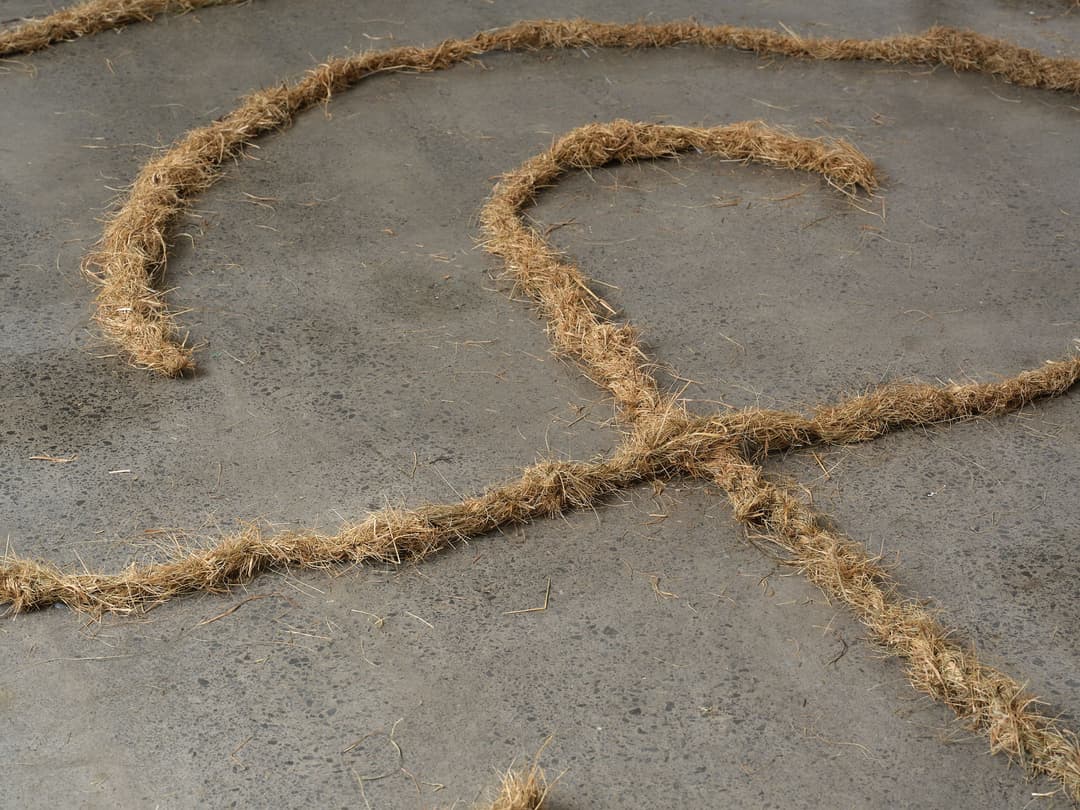
Such ideas around parenting, time and the environment underpin Wendelien Bakker’s sculptural sundials and spun-straw labyrinth. Pocketfuls of raisins and dried fruit are bronze-cast as talismanic objects that gesture to a loss of control over time, replacing the numbered hours on the sundial. This impulse, to slow time down, is also embedded in the spiralling labyrinth. A labyrinth is a kind of parent-child form, where the way through is nestled inside the walls of the structure, suggesting a nurturing or protective journey through life.
My awareness of alternative perceptive frameworks increased after starting to think about this exhibition. I visited the Giardino Mistico dei Carmelitani Scalzi, a holy garden in Venice tended by Carmelite monks. The garden is arranged in seven distinct sections which reflect the personal spiritual progress of the order’s foundress, Saint Teresa of Ávila, as outlined in her 16th century text The Interior Castle. To enter the garden is to embark on a particular symbolic journey that establishes a profound relationship between physical and spiritual states. At the centre of the garden, the heart’s chamber, a laden pomegranate tree is growing. If spirituality requires getting out of one’s own way, maybe walking is the method. This is the going-in-a-field: a recognition of how the body’s passage through space is deeply interlinked with immaterial sensations. Outside the garden, countless belltowers continue to chime on the hour and its quarters.
In Kiruna, I encountered a photograph of a Sámi woman spinning grass in the summer into coiled loops. These skeins are carried on the front of a sled to store for use as soft lining for shoes and cradles in the winter, drying into insulative matter as they travel between the mountains and the flatlands, guided by seasonal shifts. As a child, I would sit on the back of the hay baler and watch the mechanical arms feed scoops of dried-out grass into the implement. Behind us, onto a path of flattened paddock, tumble tight bales that have compressed the repetitive circuit, first to cut the grass, then to toss it, and toss it again, and finally to make it into a form that can be stacked and kept. Hay, straw, bread – any reserves that involve time or patience – are materials that hold a different present inside of them. The turning of grass into hay might be thought of as another kind of clock.
In Derek Jarman’s Chroma, he describes every colour with its own speed or pace.1 Colours like red or a sharp yellow have a quickening quality, drawing traffic to a stop, an alertness. Between the two are graduating shades of orange – the herald of autumn, a citrus fruit, a once-urgent sign now faded from the sun. These might be slower colours, hues that take time to arrive. Jarman was writing while enmeshed with the medical system, likely acutely tuned to the precise measurement and classification of this context. To think about colour as having its own internal rhythm articulates its ability to determine the way a day is felt: a grey day, a blue day.
When attention is elsewhere, time disappears, as if a psychic shadow has been cast over timekeeping faculties. Sundials of various constructions, involving sticks, stones and makeshift pyramids are one of the oldest ways of telling time through gauging the length of shadow on the dial. Without light, no shadow can be cast: no time. Jarman writes of shadow as the queen of colour, omnipresent but holding the power to thwart colour entirely: “you can’t lock it in a jewel box as it vanishes in the dark.”2 Timekeeping is, at best, a way of orienting oneself in the light. Anticipating the millennium, Etel Adnan expressed the futility of planning for the coming age, writing, “we are nearing the 21st with no adequate ideas of how to face it. How can we get ready for a century? It’s not a party, after all. We swim in full madness when we think that we have to be prepared for anything. Things make us. We don’t make them.”3
The eclipse happens concurrent with the heatwave and parts of the Northern Hemisphere are slid into darkness. The area is mapped both in black for the eclipse’s coverage and red for the extreme temperatures. The colour field takes on a new meaning. These are conditions that no clock is sufficient for. How might understandings of time change in an age of crisis?
A clear step along the spectrum of colour is actually a stride over infinite further possibilities. Neither colour, nor time, are truly incremental. There is a phrase published in a book by Fanny Howe that I return to often, translated from a poem by Ilona Carmel, where she writes “Time became a new way of computing: days, hours, fears.”4 The division of time into units of minutes and seconds transforms that field into something bleak and numerical. These partitions render an impoverished relationship to such metaphysical concepts. Despite this, more expanded ways of understanding – or not-knowing – colour and time endure.
Many non-Western calendars represent the year as a circle or a spiral, rather than a block of time with a start and an end. Every year, you cross over the same point. While reading Adnan, I was surprised by my own marginalia beside her description of Christmas as three weeks old and Easter, which for her meant spring, nearing – birth and death in close proximity.5 I had written “the repetition of the seasons confirms there is no singular birth/death but ongoing celebration and mourning.” There’s something here about things that turn, as if the motion of shifting away from what is directly on the horizon produces time. Even the face of a clock is a circle. The current fascination with efficiency and productivity is foolish. When time is experienced as non-linear, the path from a to b will take longer; this is the closest thing to gaining more time.
The clocks just changed for daylight savings but what that really means is that the seasons are changing. Hay is a clock, bread is a clock, a dandelion is a clock. The standards are inadequate approximations of the cycles already sensed: seasons, phases of the moon, the sun rising and setting and the moon rising and setting too, the appearance of certain colours or constellations in the world, and the persistent imperfect calibration against a consciousness wider than our own.
Jane Wallace, September 2026
1 Derek Jarman, Chroma (New York: The Overlook Press, 1994).
2 Jarman, Chroma, 23.
3 Etel Adnan, Paris, When It’s Naked (California: The Post-Apollo Press, 1993), 11. 4 Fanny Howe, Night Philosophy (London: Divided Publishing, 2020), 28.
5 Adnan, Paris, When It’s Naked, 4.